Walter
Life on the road asks a lot of a driver. Long hours, changing delivery times, limited food choices, and uneven sleep can make “healthy habits” sound unrealistic. The useful answer is not a perfect routine. It is a small set of choices that works on ordinary days and is easy to restart after a difficult one.
This guide focuses on practical wellbeing for professional drivers. It is general information, not medical advice; talk with a qualified clinician about symptoms, medications, or a plan that fits your individual health needs.
Build a Routine Around Stops You Already Make
The most durable habits do not require an extra hour. Tie them to moments already built into a trip: a few minutes of walking while fuel is finishing, filling a water bottle before the key turns, or packing tomorrow’s food while you are parked for the night.
Start with one cue and one small action. A ten-minute walk after a break is more likely to become regular than a complicated program that only works at home.
Make the Easy Food Choice the Better Food Choice
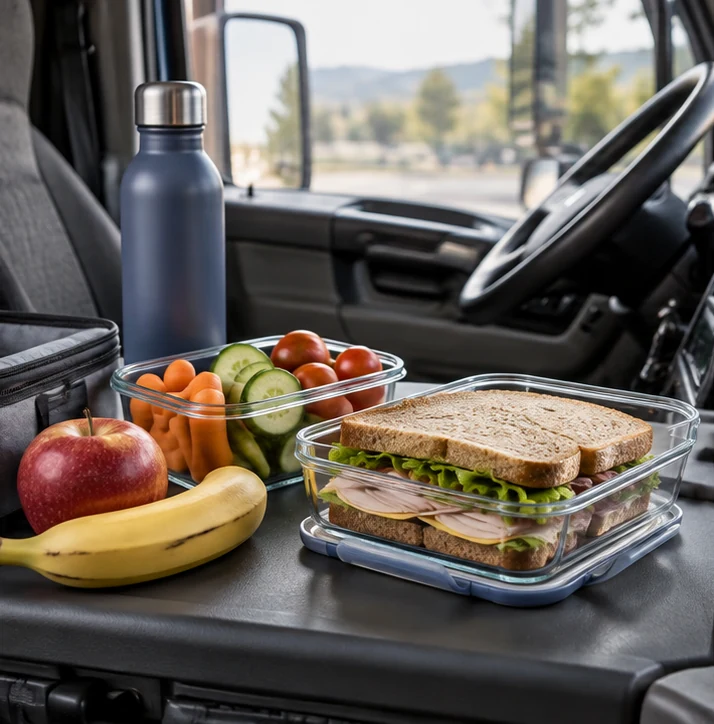
Truck-stop meals can be part of life on the road, but planning one or two simple options reduces the pressure to decide while tired or rushed. Keep a small cooler or insulated bag stocked with foods you enjoy and can safely store: fruit, cut vegetables, yogurt, nuts, whole-grain sandwiches, and leftovers prepared at home.
Pair meals with water and try not to let caffeine carry the entire day. Coffee can be useful, but it cannot replace sleep or hydration. The goal is steady energy, not a restrictive rulebook.
Use Movement as a Reset, Not a Punishment
Sitting for long periods can leave anyone stiff. Gentle movement during a break can help drivers feel more alert and comfortable without turning the stop into a workout. Walking the perimeter of the parking area, shoulder rolls, calf raises, and a few controlled stretches are realistic options when space and conditions are safe.
Stay aware of traffic, uneven pavement, weather, and surroundings. If pain is sharp, new, or persistent, stop and seek appropriate medical guidance instead of trying to push through it.

Protect Sleep Whenever the Schedule Allows
Rest is a safety tool. Create a wind-down routine that works in the sleeper: dim screens when possible, use earplugs or an eye mask if they help, set the cab temperature for comfort, and give yourself a few quiet minutes before trying to sleep. Consistency matters more than an ideal setup.
If fatigue is building, treat it as a signal rather than something to negotiate with. Find a safe place to stop and follow your company’s policies and hours-of-service requirements.
Keep the Plan Kind and Repeatable
Wellbeing is not ruined by a drive-through meal or a missed walk. The helpful question is simply: what is the next workable choice? Refill the water bottle, take a short walk, make the next meal a little more balanced, or get to sleep earlier when the route allows.
For drivers, a sustainable routine is one that survives a real schedule. A few small habits can support better energy, comfort, and focus mile after mile.