Walter
A long-haul driver can spend most of a day in an air-conditioned cab and still face serious heat at a shipper, receiver, fuel stop, or roadside delay. A loading yard may have little shade, hot pavement, and a long wait for paperwork. Opening a trailer, checking a seal, or handling freight adds physical effort just when the air feels hardest to breathe. Heat safety therefore belongs in the trip plan, not only in a warehouse safety poster.
This guide is general safety information for professional drivers. It is not a medical diagnosis or a substitute for advice from a clinician. The most important practical rule is to respond early to symptoms and avoid driving when heat leaves you dizzy, confused, or unable to concentrate. A delivery appointment can be changed; a serious heat illness cannot be driven through.
Expect heat outside the cab, even on a driving day
Heat exposure is a combination of conditions, not simply the number shown on a dashboard thermometer. Sun, humidity, physical effort, clothing, and air movement all matter. The NIOSH overview of heat stress notes that both outdoor and indoor workers can be at risk. Trucking moves a driver between environments: a cool cab, a sunny asphalt yard, a warm trailer, and sometimes an indoor dock without effective cooling.
Think about the hottest task before arriving. Will you wait outside at a gate? Crank landing gear, open heavy doors, secure cargo, or walk across a large terminal? If a customer expects work in a hot area, ask where water and a cooler rest area are available. Coordinate with dispatch when a delay or physical task changes your planned break. A driver does not need to wait for obvious illness before seeking a cooler place.
Prepare water and a backup cooling option
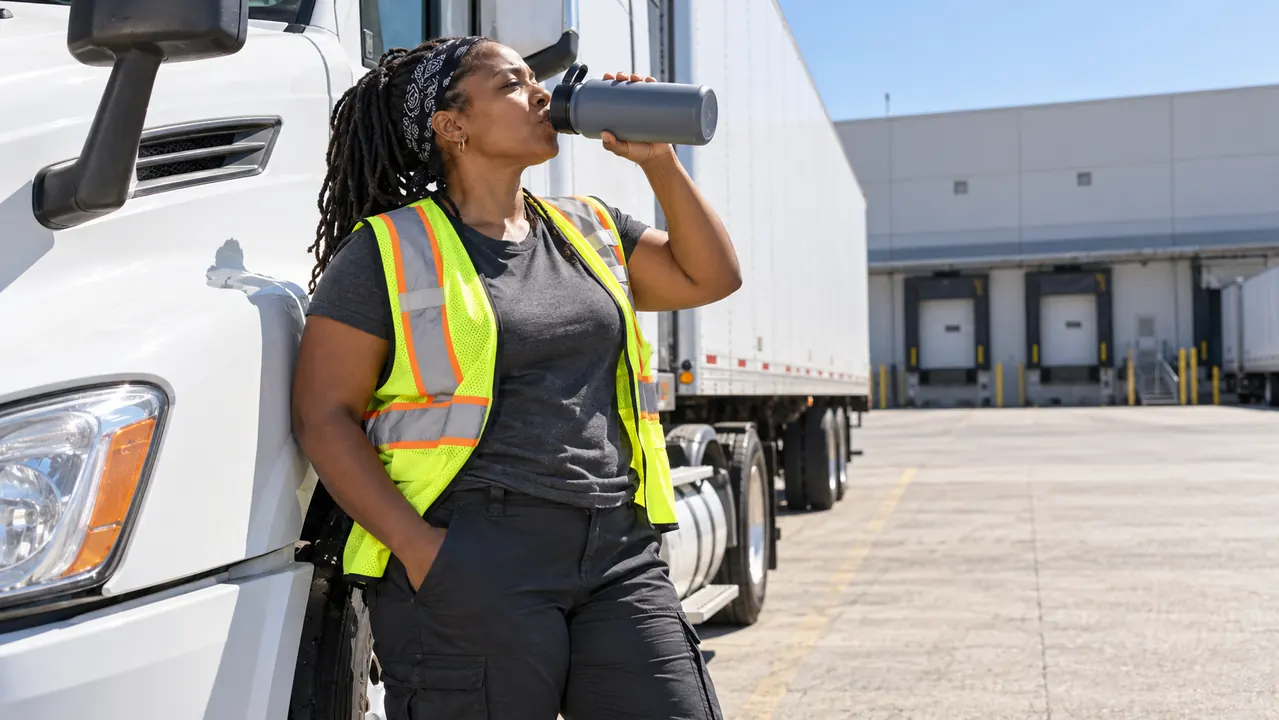
Keep drinkable water within reach before leaving the truck stop, and refill whenever there is a reliable opportunity. Do not assume the next warehouse will provide a fountain or let outside drivers use a break room. OSHA's Water. Rest. Shade. guidance emphasizes frequent access to cool water and rest in a cooler area. The amount someone needs varies with conditions, work, and individual health; a driver with a medical restriction should follow professional advice rather than a one-size-fits-all target.
For an extended hot work period with heavy sweating, discuss suitable fluids and breaks with your employer's safety guidance. A cooler, insulated bottle, and shade plan are simple tools, but they only help when the driver can use them. Note nearby travel centers or safe parking areas before a rural delivery. If the truck's air conditioning fails, treat that as a maintenance and route-planning issue, especially before entering a very hot region.
Use the wait time as a safety check
Detention at a loading dock is frustrating, and drivers often try to finish all paperwork and vehicle checks in one burst as soon as the dock releases the load. On a hot day, that rush can mean repeated trips across the yard without a drink or pause. Break the tasks into an orderly sequence. Where the facility allows it, spend waiting time in a cool, safe place. When you must be outside, look for shade and avoid standing next to running equipment or hot exhaust.
Tell dispatch early if heat or a long wait is affecting the remaining drive. A revised departure time may also change where you can stop later. Leaving the yard already overheated and then pressing toward the next appointment is a poor way to start a long driving block. If you need time to cool down, say so before the truck moves.

Recognize heat exhaustion before it becomes an emergency
Heat exhaustion may bring heavy sweating, headache, nausea, dizziness, weakness, thirst, or irritability. The NIOSH guide to heat-related illnesses lists these warning signs and first-aid steps. A driver who feels lightheaded should stop the task, move to a cooler area, tell someone nearby, and seek medical evaluation. Do not climb into the cab and assume air conditioning alone makes it safe to continue driving immediately.
Heat stroke is a medical emergency. Confusion, slurred speech, loss of consciousness, seizures, or a very high body temperature require an immediate call to 911. A person can still be sweating; dry skin is not a requirement. Move the person to a cooler place and begin cooling while emergency help is on the way, following dispatcher instructions. Do not leave the person alone or delay care to finish a load. When symptoms are uncertain, err on the side of getting help.
Drivers often work alone, so a simple check-in system matters. If you are delayed outdoors or feeling unwell, tell dispatch and a facility contact where you are. If another driver appears confused or collapses in the heat, call emergency services rather than assuming they only need a bottle of water. Quick recognition and response can change the outcome.
Account for medication, illness, and a return to hot work
Some health conditions, medicines, and recent illness can affect tolerance to heat. A driver who has been away from hot work for a while may also need time to adjust. NIOSH lists lack of acclimatization, dehydration, physical exertion, and certain medications among heat-stress risk factors. Talk with a qualified clinician about personal risks and with your employer about safe work arrangements; do not change medication on the basis of an online article.
Returning from time off during a heat wave calls for extra attention. Build the day around planned pauses, access to water, and realistic physical tasks. If a facility insists on fast work outdoors while symptoms develop, tell the responsible person and ask for a safer arrangement. A company safety policy should make it possible to report that problem before a driver is in distress.
Protect the next driving leg
A hot yard can affect attention even after you return to the cab. Before moving, sit in a cooler environment long enough to feel alert, check the route, and confirm the next safe stop. If you are still dizzy, weak, or unusually fatigued, do not drive. Contact dispatch and seek medical advice. Heat-related symptoms can resemble ordinary tiredness, but treating them as a schedule inconvenience risks the driver and everyone else on the road.
Check that the cab climate system actually cools while parked and moving. Direct sunlight through glass can make a parked cab hot quickly, and a sleeper that does not cool well may reduce the quality of rest. Plan legal parking with shade when possible, while recognizing that shade availability varies. Do not idle or run auxiliary equipment in a way that violates site rules, local requirements, or company policy; find an approved cooler location instead.
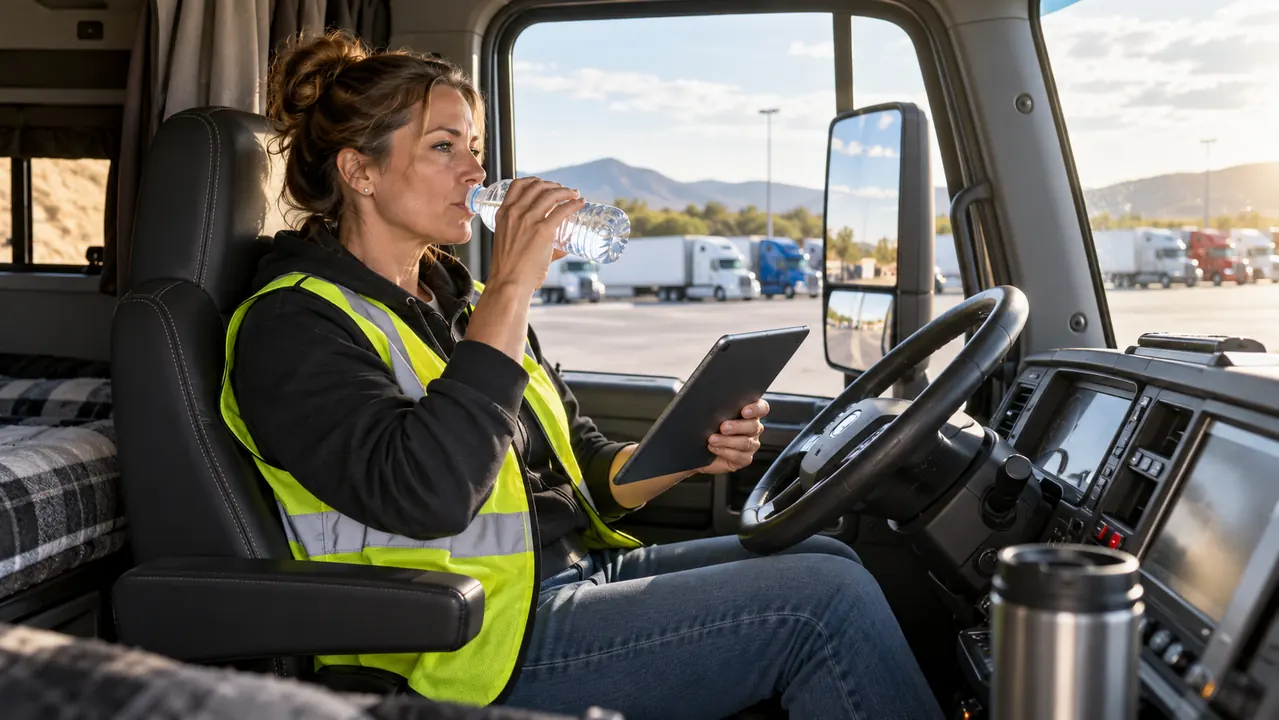
A practical hot-day checklist
- Check the weather and identify hot outdoor tasks at each stop.
- Carry water and know where you can refill or cool down.
- Ask about shade or an indoor rest area when a dock wait becomes long.
- Pause physical work early if you feel dizzy, weak, nauseated, or unusually overheated.
- Call 911 for confusion, collapse, seizure, or other signs of heat stroke.
- Tell dispatch if heat changes your safe departure, appointment, or parking plan.
- Do not resume driving until you are alert and fit to operate the truck.
Heat safety on the road is about making room for ordinary, repeatable decisions: water before the next stop, a cooler place to wait, a realistic schedule after a delay, and a clear response when someone is unwell. Those choices are easier to make before symptoms arrive. A driver who plans for the hottest part of the day is better prepared to finish the route safely.