Walter
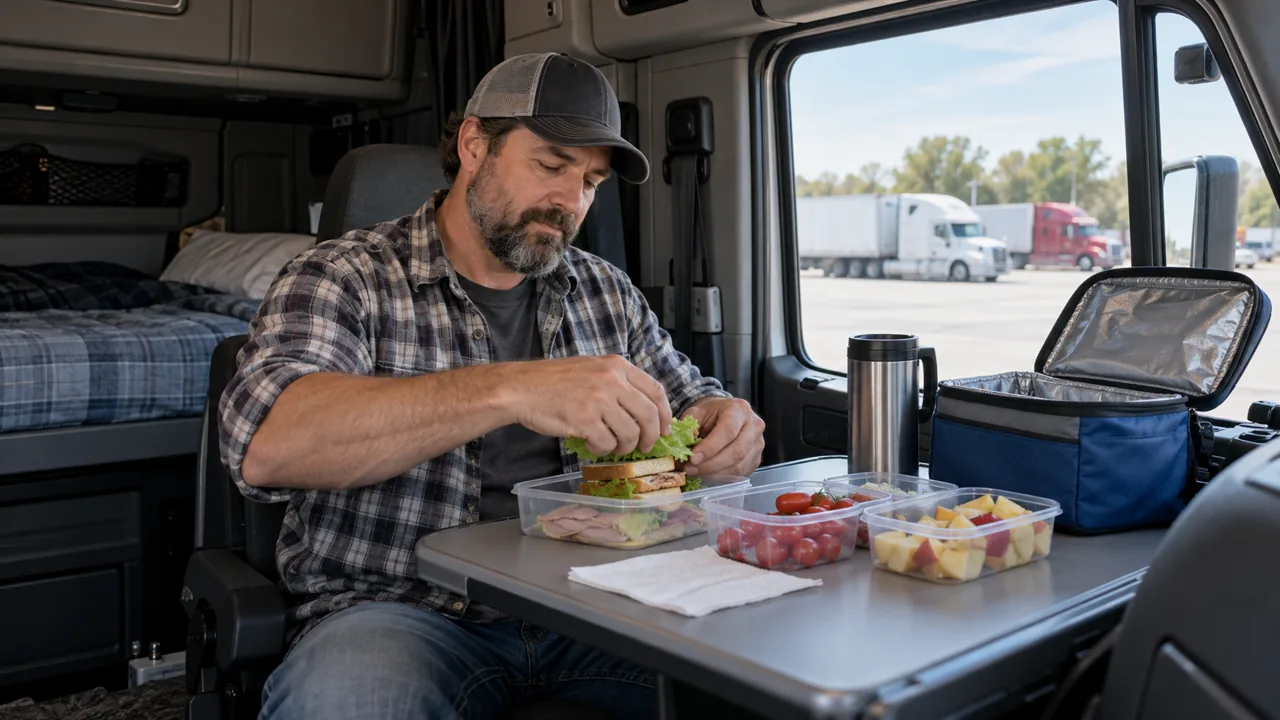
A workable meal plan for a trucking week begins with storage, stopping opportunities and the food a driver is willing to eat repeatedly. An ambitious menu can fail on the first afternoon if it assumes a refrigerator, preparation space or access to shops that the actual truck and route do not provide. Start with a small number of familiar options. Then connect each one to the equipment, food-safety instructions and schedule available during the trip.
Check the storage before choosing the menu
Inspect the cab's available food-storage arrangement and follow the equipment instructions. Know what the refrigerator or cooler is designed to do and how its performance is checked. Space matters as much as capacity on a product label. A container that fits at home may block access to other items once the cab is packed.
Choose foods on the basis of their storage requirements. Shelf-stable items and foods needing refrigeration belong in different parts of the plan. Read product labels and use authoritative food-safety guidance for handling questions. Avoid assuming that a cool night or a parked cab provides the same conditions as controlled refrigeration.
Build a few repeatable combinations
Select meals from ingredients you already know how to use. A simple combination with a clear storage method is easier to sustain than a collection of recipes requiring many separate tools. Include options for days when the preferred stop or preparation facility is unavailable.
For example, one driver might plan a familiar refrigerated meal for the first suitable stop and carry a shelf-stable alternative for another day. The purpose of the alternative is practical flexibility. It should be something the driver actually likes and understands how to store, rather than a forgotten item packed only because it lasts a long time.
Pack in portions that fit the workday
Think about when a container will be opened, how the food will be served and where utensils will go afterward. A large family-size package can be inconvenient in a small cab. Smaller planned portions may simplify access and reduce the amount exposed during one meal. Follow the applicable handling guidance rather than relying on portion size alone.
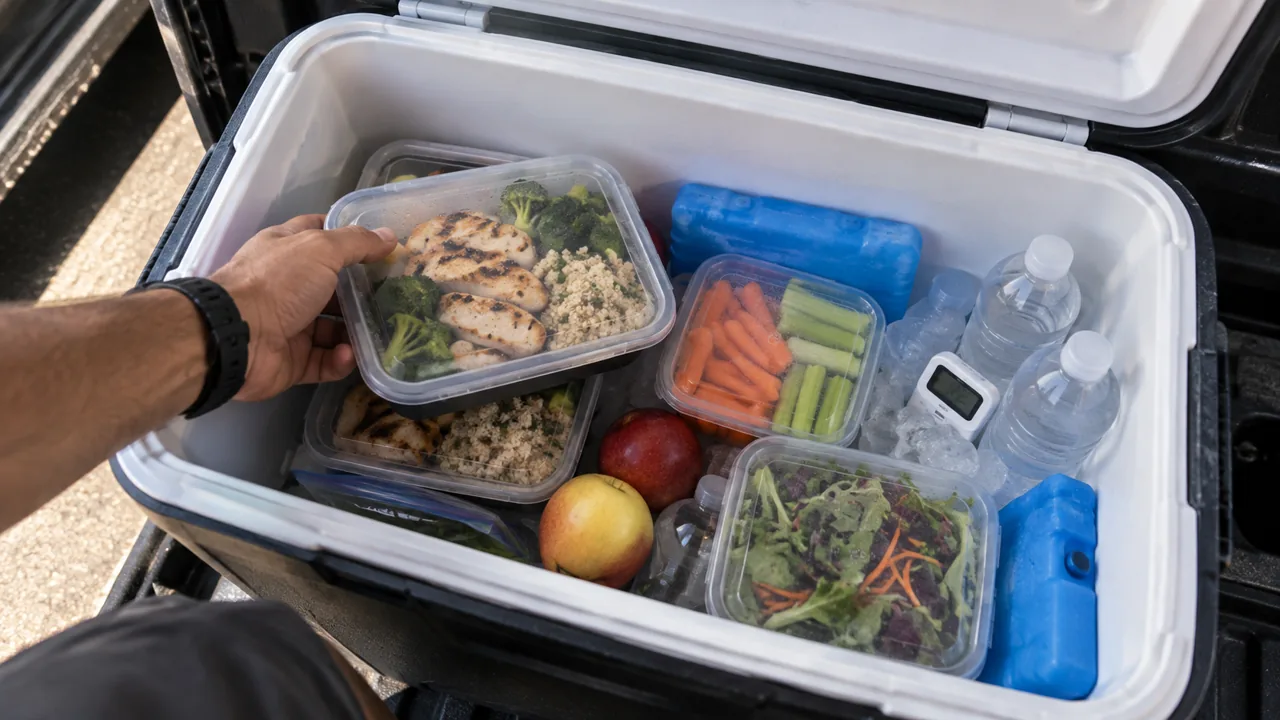
Label prepared food as needed for your own safe storage routine. Keep ingredients recognizable and avoid unmarked containers that become difficult to distinguish after several days. The USDA leftovers guidance provides a useful reference for storage and handling decisions about prepared food.
Treat the preparation area as part of the plan
Decide where food can be prepared appropriately while the vehicle is parked. Keep the area separate from work documents, cleaning chemicals and items used during vehicle inspections. A clear surface and a simple cleaning routine make the task easier to complete consistently in limited space.
Check the instructions and carrier policy for any appliance used in the cab. Power demand, mounting and ventilation are equipment questions that need the correct answers before use. A device advertised for travel is not automatically suitable for every truck. Choose a meal plan that works with approved equipment instead of improvising a power arrangement around a recipe.
Plan shopping around real stops
Look at likely replenishment opportunities and avoid depending on a shop whose access has not been checked for the truck. An address near the route does not establish commercial-vehicle parking. A driver may need to buy food at an approved stopping facility or arrange supplies before departure.
Keep a short shopping list based on what remains. Replenishing by habit can leave several similar packages open while the ingredients needed to finish a meal are missing. A quick inventory before the next shop is often more useful than a detailed menu written days earlier without reference to the cab's actual contents.
Leave room for ordinary changes
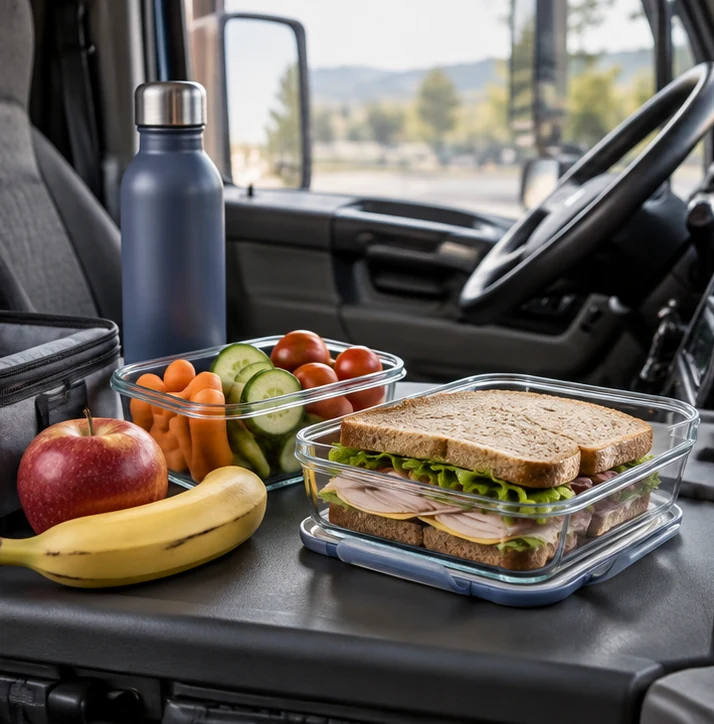
A late collection, changed route or unplanned maintenance stop can disrupt meal timing. Have a suitable alternative available and adjust the plan without treating the interruption as a reason to abandon it entirely. A sustainable routine should cope with an imperfect day.
The USDA MyPlate resources offer general guidance on planning varied meals. Individual nutrition or medical questions should be discussed with an appropriate professional. For everyday organization, the useful step is to make familiar choices available in a form that suits the truck, the route and the driver's own needs.
Review what was actually eaten
At the end of the week, compare the original plan with the food used, bought and discarded. Ask why each unused item remained. Perhaps the package was awkward, the meal needed more preparation than expected or the driver simply did not want it after a long shift. Those are useful planning facts.
Make the next week's plan smaller and more realistic where necessary. Keep successful combinations and replace one unsuccessful choice at a time. A well-organized cab meal routine does not need an elaborate menu. It needs suitable storage, manageable preparation, a few reliable alternatives and ingredients that are likely to be used before the trip ends.
## Include the return home in the plan
At the end of the trip, empty and check the storage arrangement according to the food and equipment instructions. Separate retained supplies from anything requiring appropriate disposal, and clean the relevant containers and surfaces before repacking. Use this reset to review unnecessary equipment. If a utensil or appliance was never needed, consider whether it belongs in the next trip's limited space. Keep tools that support meals you actually prepare. The new week should begin with an understood inventory and suitable storage, giving you a clear starting point instead of uncertainty about leftovers from the previous journey.